

When I learned how to manage continuous improvement programmes at Shell many years ago, one principle was drilled into us from the very beginning: if you want to create real transformation, you first need to establish a genuine sense of urgency.
Not artificial urgency. Not corporate slogans. Real urgency.
The kind of urgency where people suddenly understand that standing still is no longer an option.
For years, climate conferences have often struggled with exactly that problem. The science was urgent, but politically and economically many governments still behaved as though there was time. COP30 was another example of this tension. While the summit produced progress in language and ambition, much of the world barely noticed what may have been one of the most important unresolved questions left hanging afterwards:
What does a real transition away from fossil fuels actually look like?
That question became the reason why an unusual gathering took place shortly after COP30 in Colombia and why, in my view, it deserves far more attention than it received. Because something fundamentally shifted there.
And ironically, it may have been the Iran crisis that created the very urgency climate diplomacy had struggled to establish for decades.

The summit few people noticed
The event in Santa Marta, Colombia did not attract the same global headlines as COP30 itself. There were no dramatic final declarations dominating the news cycle. No universally binding agreements. No historic treaty moment.
Yet beneath the surface, this may turn out to have been one of the more consequential climate and energy gatherings in recent years.
More than 50 countries came together to discuss something previous COP negotiations often carefully avoided discussing directly: how the world actually transitions away from fossil fuels in practical, economic and geopolitical terms.
Not simply net zero targets. Not simply renewable ambitions. But the mechanics of reducing dependency on oil, gas and coal itself.
That distinction matters enormously.
The summit emerged partly as a response to frustration with the formal COP process. Many countries increasingly feel that global climate negotiations have become too slow, too constrained by consensus politics, and too heavily influenced by competing geopolitical and fossil fuel interests.
So what began emerging instead was what many now describe as a “coalition of the willing”, countries prepared to move faster together, even if universal consensus remains impossible.
Why Colombia mattered
What made the event particularly fascinating was the host itself.
Colombia is not a country standing outside the fossil fuel system pointing fingers inward. It is itself an oil-producing economy, dependent on fossil fuel revenues and exposed to all the economic tensions that come with energy transition.
That gave the summit credibility.
Because the conversation was no longer framed as:
“fossil fuels bad, renewables good.”
Instead, the discussion became:
“How does a producing economy realistically navigate transition without destabilising itself?”
That is a far more serious and politically mature conversation.
In many ways, Colombia represented exactly the type of country the global transition debate now revolves around:
- developing economies,
- producer nations,
- energy-dependent populations,
- and governments trying to balance climate commitments with economic survival.
The symbolism was powerful.
If even oil-producing nations are openly discussing long-term fossil fuel decline strategies, then the global debate has clearly moved into a new phase.
But what was actually achieved?
Critics are correct that the summit did not produce binding agreements or enforceable fossil fuel reduction treaties.
- There were no mandatory phase-out schedules.
- No global enforcement mechanisms.
- No breakthrough financing structure.
But measuring the summit only through that lens misses its significance. Politically, it achieved several important things.
- First, it legitimised direct discussion about fossil fuel decline in a way many COP negotiations still avoid.
- Second, it created alignment between countries willing to collaborate outside the slower UN consensus framework.
- Third, it reframed the transition discussion around economics, resilience and security, not only emissions.
- And finally, it signalled that climate diplomacy itself may be evolving into something more decentralised and coalition-based.
In that sense, the summit may prove historically important not because of immediate policy outcomes, but because of the shift in strategic thinking it represented.
Valid criticism
At the same time, the critics have legitimate points. The absence of some of the world’s largest emitters and energy consumers — including China, India and the United States — exposed the limits of the coalition. Without the major powers, any global transition remains incomplete.
There were also difficult unanswered questions around financing. Many developing nations continue to ask a very fair question:
Who pays for transition?
Countries dependent on fossil fuel revenues cannot simply turn off large parts of their economies overnight without alternatives, investment, infrastructure and industrial replacement strategies. And perhaps most importantly, there remains a deep contradiction at the centre of the transition itself.
At the very moment countries were discussing reducing fossil fuel dependence, the Iran crisis was simultaneously reminding the world how dependent it still is. That contradiction changed the entire tone of the summit.
The Iran crisis changed the conversation
This, to me, was perhaps the most interesting development of all and as my dear late father used to say, there is always a silver lining.
For years, climate diplomacy primarily framed fossil fuels as an environmental problem. The Iran crisis suddenly expanded the discussion into something much broader.
The Colombia summit linked three things together in a way COPs often avoid:
- Fossil fuels as climate risk.
- Fossil fuels as economic risk.
- Fossil fuels as geopolitical risk.

That triangulation is politically extremely powerful. Because suddenly the transition discussion was no longer only about future generations or carbon targets.
It became about:
- inflation,
- energy security,
- shipping routes,
- industrial resilience,
- food prices,
- national sovereignty,
- and economic stability.
The Strait of Hormuz disruptions reminded governments how fragile the global energy system still is when so much depends on geopolitical stability in a handful of regions.
And that changes political behaviour much faster than climate science alone often can.
We already saw a version of this after Russia invaded Ukraine, when Europe accelerated renewables, electrification and energy diversification not purely because of climate ambition, but because energy dependency suddenly became a strategic vulnerability. The Iran crisis appears to have created a second acceleration wave. This is why the Colombia summit matters far beyond climate policy.
It may represent the moment where the energy transition stopped being viewed primarily as environmental responsibility and started being viewed as strategic resilience.

A deeper and hopefully accelerated shift may now be underway
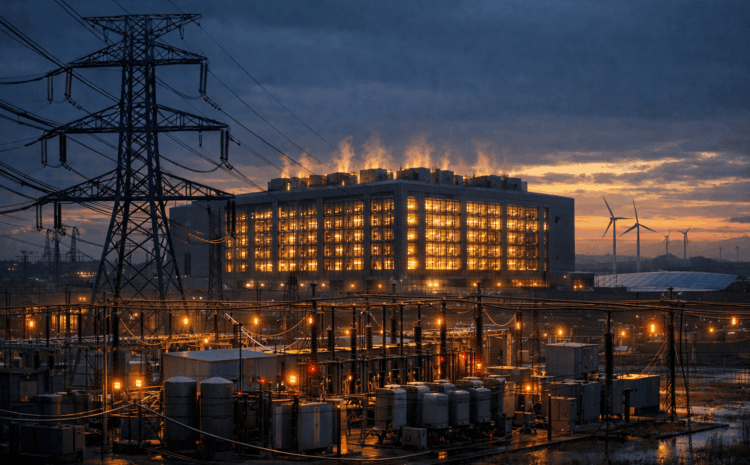
Historically, global power has often revolved around control of oil and gas. But a new geopolitical framework is now beginning to emerge.
The next era may increasingly revolve around:
- electricity systems,
- battery supply chains,
- critical minerals,
- grids,
- renewable generation,
- and industrial electrification.
Some analysts have already started describing this as the emerging divide between “petrostates” and “electrostates”. And perhaps that is the deeper story behind Colombia. Not simply another climate summit.
But an early signal that the global conversation around energy, security and economic power may be entering an entirely new phase.