
Ask a scaling cleantech founder what’s holding back their next stage of growth, and it’s rarely that the technology doesn’t work. It’s that the market doesn’t yet understand it. Prospective customers can’t see how the innovation maps onto their own costs and risks — so they hesitate, defer, or run a pilot they never scale.
This is the real barrier for most innovators in the energy and mobility transition. Not technical feasibility — comprehension and credibility. And it is almost never solved by better messaging.
The instinct, when a market doesn’t understand your product, is to describe it more loudly: sharper slogans, bolder claims, a slicker deck. It rarely works. Buyers of new technology are being asked to take a risk, often to replace an incumbent that is “good enough.” No adjective closes that gap. A credible, quantified business case does — total cost of ownership, payback, risk removed, in the buyer’s own numbers, robust enough to survive their own finance team. Evidence sells; assertion doesn’t.
The buyer wants numbers, not a story
Picture the person across the table. Rarely the chief executive — more often a business-unit head or plant manager who owns a budget and a specific problem, and who has to justify any purchase upward. For them, adopting an unfamiliar technology is a career risk as much as a commercial one. They don’t need to be inspired. They need to be armed with a case that withstands scrutiny.
Most organisations can’t build that case even when they want to. In KPMG’s 2025–26 global survey, only around one in five executives could quantify how sustainability initiatives affect profit, cash flow or valuation (KPMG, 2026). Hand a buyer that number — credibly, in their language — and you remove the single biggest obstacle to the sale. The quantified case isn’t a nice-to-have; it is the route to market.
The economics are there to be proven
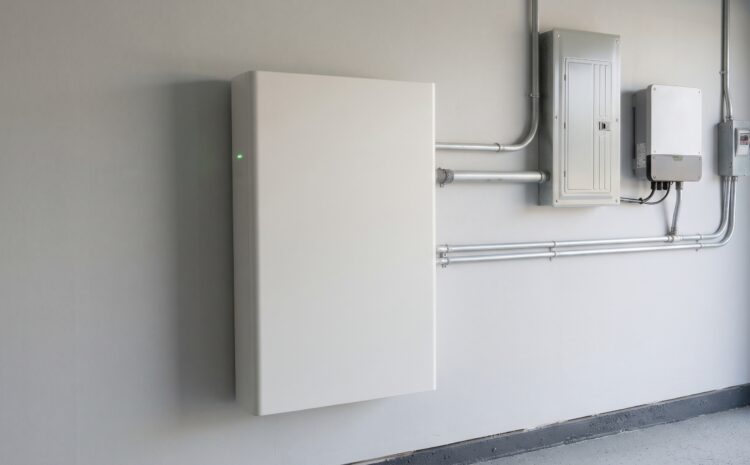
What has changed is that, for a growing share of transition technologies, the underlying economics now favour the innovator. The benchmark cost of a four-hour battery project fell 27% in a single year, to around $78 per megawatt-hour (BloombergNEF, 2026). On paper, storage clears the bar. But a headline cost is not a bankable return: outside China, systems cost substantially more, and whether a specific project pays depends on local power prices, the revenue it can stack, and financing. The economics are winnable — but only project-level modelling proves it to the buyer who has to sign.
The same holds in data centres, where global electricity demand is set to more than double by 2030, driven by AI (IEA, Energy and AI, 2025). In Europe — expensive power, rationed grid connections — energy and cooling economics now decide whether a facility can be built at all. An operator weighing a new approach isn’t moved by efficiency claims. They are moved by a credible model of lifetime cost that survives their own assumptions.
Evidence moves markets faster than ambition
The pattern scales. Where demonstrated economics are clear, adoption and even regulation follow: India is now moving storage from an optional extra to a procurement obligation as the cost and system case becomes undeniable (Energy-Storage.News, 2025). Capital has already made the same judgement — clean energy, grids and storage attract roughly twice the investment of fossil fuels (IEA, World Energy Investment 2025). Markets respond to proof, not ambition.
That is the opportunity. A single, rigorously evidenced use case persuades three audiences at once: the customer to buy, the regulator to enable, the investor to fund — and each proven case lowers the cost of the next. Evidence compounds in a way marketing spend never does.
The discipline that wins
Building a case robust enough to carry a sale is a discipline in its own right, and most technically brilliant teams have never had to master it. It means modelling total cost of ownership over the asset’s life, not the sticker price. Pricing the risk removed, not just the efficiency added. Expressing everything in the customer’s terms and stress-testing it against their assumptions. And designing pilots to prove commercial viability, not merely technical feasibility — so what emerges is bankable evidence, not just a successful experiment.
It is the work we do with scaling companies and the corporates that buy from them: turning an innovation into a quantified case a buyer’s own team can defend — whether that’s a storage or data-centre proposition, or any of the new technologies emerging across the energy and mobility transition. The technologies change; the discipline doesn’t — make the value undeniable in the buyer’s own numbers.
The technology, increasingly, is the easy part. What stays scarce is proof. Supply it, and you stop having to convince the market.
Prove it, and the business will follow.
Sources
- KPMG, Sustainability gap exposed: only one-fifth of execs are quantifying financial impact (2026): kpmg.com
- BloombergNEF, Battery storage costs hit record lows (2026): about.bnef.com
- IEA, Energy and AI (2025): iea.org
- IEA, World Energy Investment 2025: iea.org
- Energy-Storage.News, India’s energy storage story (2025): energy-storage.news
- Illustrative work (anonymised): battery-storage go-to-market and data-centre cooling value modelling, among other NovAzure client engagements across the energy and mobility transition.