

The ongoing conflict involving Iran is, first and foremost, a human and geopolitical tragedy. The immediate consequences are already visible, and much more may be coming our way as strategic oil reserves deplete, and economies face growing energy shortages.
As energy supply is disrupted at scale, the impact does not remain confined to oil and gas markets; it spreads across the entire economy. We are already seeing the early signs of what typically follows. Higher oil and gas prices feed into fertiliser costs, which in turn impact food prices. And when energy becomes more expensive, the cost of producing and transporting goods rises, with effects flowing through almost every sector and contributing to inflation.
This is not a marginal effect. It is structural. And in the short term, it creates real pressure on households, businesses, and entire economies. Volatility and uncertainty tend to follow.
And yet, if you zoom out slightly, another dynamic is at play: energy shocks do not only disrupt economies, they also act as catalysts for change.
The 1973 oil crisis reshaped global energy systems, driving efficiency improvements and nuclear deployment. More recently, the Russia–Ukraine war forced Europe to rethink its dependency on Russian gas almost overnight, accelerating renewable energy and diversification strategies that had been discussed for years but only partially implemented.
What tends to happen in these moments is not that new ideas emerge, but that existing transitions suddenly become urgent. That is what we may be witnessing again, with one of the clearest shifts being around energy security.
Fossil fuels, by their nature, create geographic dependency. Supply is concentrated, and that concentration introduces risk. By contrast, renewable energy (solar, wind, hydro, and increasingly battery storage) can be deployed locally and offers a fundamentally different degree of control.
This is no longer just a climate argument. It is increasingly a strategic one. The underlying market dynamics were already moving in that direction before the Iran war:
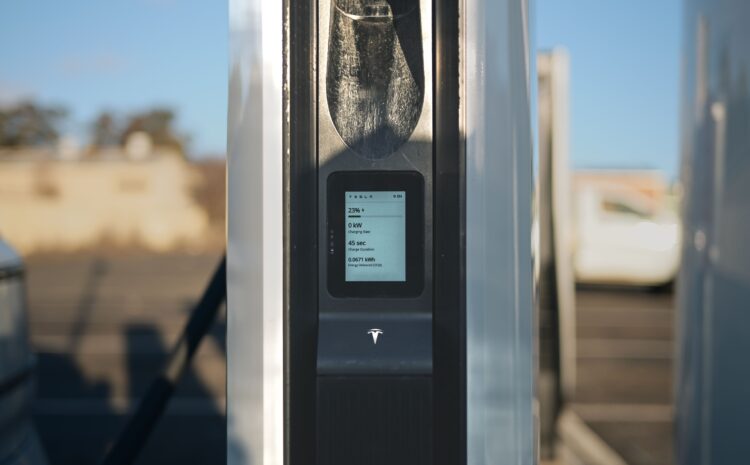
- Electric vehicle adoption has scaled rapidly. Global EV sales have grown from around 3 million units in 2020 to 23 million in 2024, with EVs increasing from 3% of global new car sales in 2020 to close to 25% today.
- Renewable energy deployment is following a similar trajectory. Installed renewable capacity has nearly doubled since 2020, rising from 2,800 GW to 5,400 GW globally, while renewables’ share of global electricity generation has increased from 27% to 37%. In many regions, solar is now the lowest-cost source of new electricity generation.
- At the same time, battery technology is changing the equation. Costs have fallen from roughly $1,200 per kWh in 2010 to a record-low average of $108 per kWh in 2025, with expectations of further declines towards $80/kWh by 2026. Grid-scale storage is also expanding rapidly, with annual growth rates of 40–60% globally in 2025. The combination of renewables and batteries increasingly enables stable 24/7 power supply at competitive prices.
But this trend has accelerated since the war in Iran. In the UK, EV inquiries have reportedly increased by 42% compared to pre-war levels, and EVs accounted for 49% of new car registrations in April. In the US, second-hand EV sales increased in April by 17% year-on-year, driven by consumers reacting to volatile fuel prices. At the same time, multiple battery mega-contracts have been signed over the last two months, whilst demand for renewable energy projects has significantly surged.
This geopolitical crisis has shifted the perception of renewables from being primarily an environmental imperative to becoming a matter of energy security, economic resilience, and strategic autonomy. And those drivers tend to move faster.
Crises compress timelines. Decisions that might once have taken a decade can suddenly be made within a few years. Capital is deployed more quickly. Policy shifts accelerate. Risk perception changes. What this moment may represent is a catalyst: one that accelerates a transition already underway, and shifts Net Zero from being a noble aspiration to becoming a competitive advantage.
Ironically, in his ardent desire to slow down renewables and protect the oil and gas industry, Trump may have become — quite unintentionally — the US president who did the most to accelerate the energy transition.